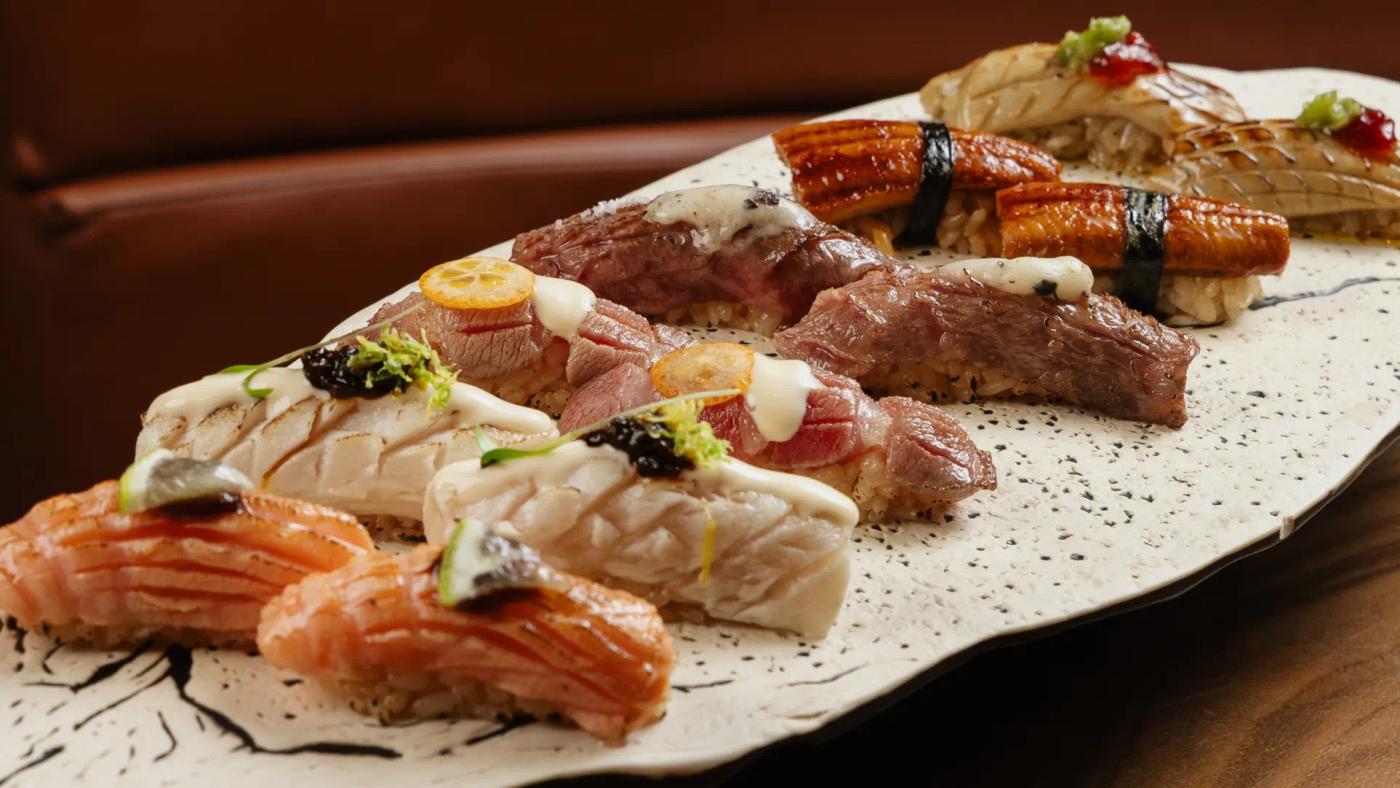
Why doesn't sushi have as much salmon in Japan?
If we think of sushi, it's very likely that the first image that comes to mind is a salmon nigiri. Or a salmon maki. Or a salmon sashimi. In Spain, it has become the most popular fish in Japanese cuisine, to the point that many people believe it has always occupied a central place.
But the truth is that, if you take a trip to Japan, you would be in for a surprise. Although salmon exists, it is only a supporting actor on a stage full of other incredible protagonists that we hardly know here. Have you ever wondered how we ended up associating sushi almost exclusively with this fish?
Salmon wasn't always a fish for sushi
Although it seems hard to believe today, during much of the 20th century, salmon was barely used for sushi in Japan. The reason was health-related: wild Pacific salmon could contain parasites, which required it to be cooked before consumption. For that reason, for decades, the Japanese enjoyed it mainly grilled, pan-seared, or cured, but rarely raw.
Meanwhile, sushi masters worked with species that could be safely consumed and were part of the local catch: tuna, sea bream, horse mackerel, mackerel, squid, octopus, shrimp, or sea urchin, among many others.
Norway changed the history of sushi
It all started in the eighties: Norway was looking for new markets for its farmed salmon and launched a campaign to convince Japan that the fish was safe to eat raw. After years of promotion, demonstrations, and trade agreements, Norwegian salmon began entering Japanese restaurants and markets.
The technical argument was solid: Atlantic farmed salmon is raised in a controlled environment and fed with feed, not with the prey that transmit parasites in open water. This broke the barrier that had kept salmon out of the sushi bar for decades.
Still, cultural resistance was enormous: for Japanese masters, salmon was a breakfast fish, something served grilled alongside white rice and miso soup. It took years, and much of the success came through the back door: supermarkets, conveyor belt sushi, and younger audiences, less attached to tradition. Today you will find it in Japan, but it is in its place: it is one option in a very long menu. In a traditional Tokyo tavern, you might not even see it on the menu, and nobody cares.
What fish are actually eaten in Japanese sushi
What a Japanese person expects to find at a good sushi bar has little to do with what has been popularized abroad:
- Tuna (maguro) is the true king: It is not treated as a single ingredient, but as three different pieces depending on the part of the animal. Akami, the lean loin, with an intense red color and clean flavor. Chutoro, the intermediate belly, with a fat infiltration that makes it silky. And otoro, the fattiest and most unctuous part, the most prized of all.
- White fish (shiromi) normally open an omakase sequence due to their delicate flavor: sea bream, sea bass, flounder, or yellowtail (hamachi), the latter with a buttery texture that conquers almost everyone.
- Blue fish (hikarimono) are what Japanese clients miss most when eating sushi abroad. Mackerel (saba) cured in salt and vinegar, horse mackerel (aji) served with grated ginger and scallion, sardine, or shad. These are pieces with character, which demand technique and proper curing time.
- The chapter on seafood and roe includes sea urchin (uni), scallop, sweet shrimp (amaebi), octopus, squid, or glazed conger eel (anago). Curiously, there is one salmon product fully established in Japanese tradition since the early 20th century: ikura, its orange roe.
All of this responds to a concept that organizes the entire Japanese cuisine: shun, the exact moment of the year when a product is at its best. The menu changes with the seasons because the sea changes with the seasons.
Why in Spain sushi is synonymous with salmon
When sushi arrived in our cities, we weren't very used to eating raw fish: we needed something that gave us confidence, an "ambassador." Salmon met all the conditions: its flavor is mild and not very "fishy," without the intensity of a cured blue fish; its texture is soft and uniform, easy for those who had never tried raw fish, and its orange color is similar to its smoked version and instantly recognizable in a photo or display case.
For the first Japanese restaurants in Spain, it was the perfect solution: a product that didn't scare anyone. The problem is that that gateway ended up becoming the final destination, and many diners have been ordering the same thing for years without knowing they are missing ninety percent of the cuisine.
Sushi with seasonal products in Barcelona's Eixample
At Arko we love salmon and prepare it with great care, but just like in Japan, we see it as just one piece of a much larger puzzle. We work with the best ingredients, from Koshihikari rice to high-quality fish. And we don't just have sushi; our robata grills and the creative touch of Nikkei cuisine also await you.
If you want the full tour, our Full Experience omakase menu is the best way to discover those fish that are rarely ordered: tuna belly, yellowtail, sea urchin, glazed conger eel. You will find us at 63 Enric Granados Street, in the Eixample of Barcelona, just minutes from Passeig de Gràcia. Come with an open mind and let yourself be surprised: there is an ocean beyond salmon.
Frequently Asked Questions
- Is salmon eaten in Japan? Yes, but much less than believed and with less prominence than in Europe. For almost the entire 20th century, it was consumed cooked or cured, never raw, due to the risk of parasites from wild Pacific salmon. It was only incorporated into sushi starting in the eighties.
- What is the favorite fish in traditional Japanese sushi? Without a doubt, tuna, for its different cuts depending on the fat. They also enjoy white fish and cured blue fish, which have a much more intense flavor.
- Where to try traditional and modern Japanese sushi in Barcelona? At Arko Restaurant, at 63 Enric Granados Street in the Eixample, we work with seasonal products, Koshihikari rice, and Anisakis-free fish, with a menu that goes far beyond salmon.