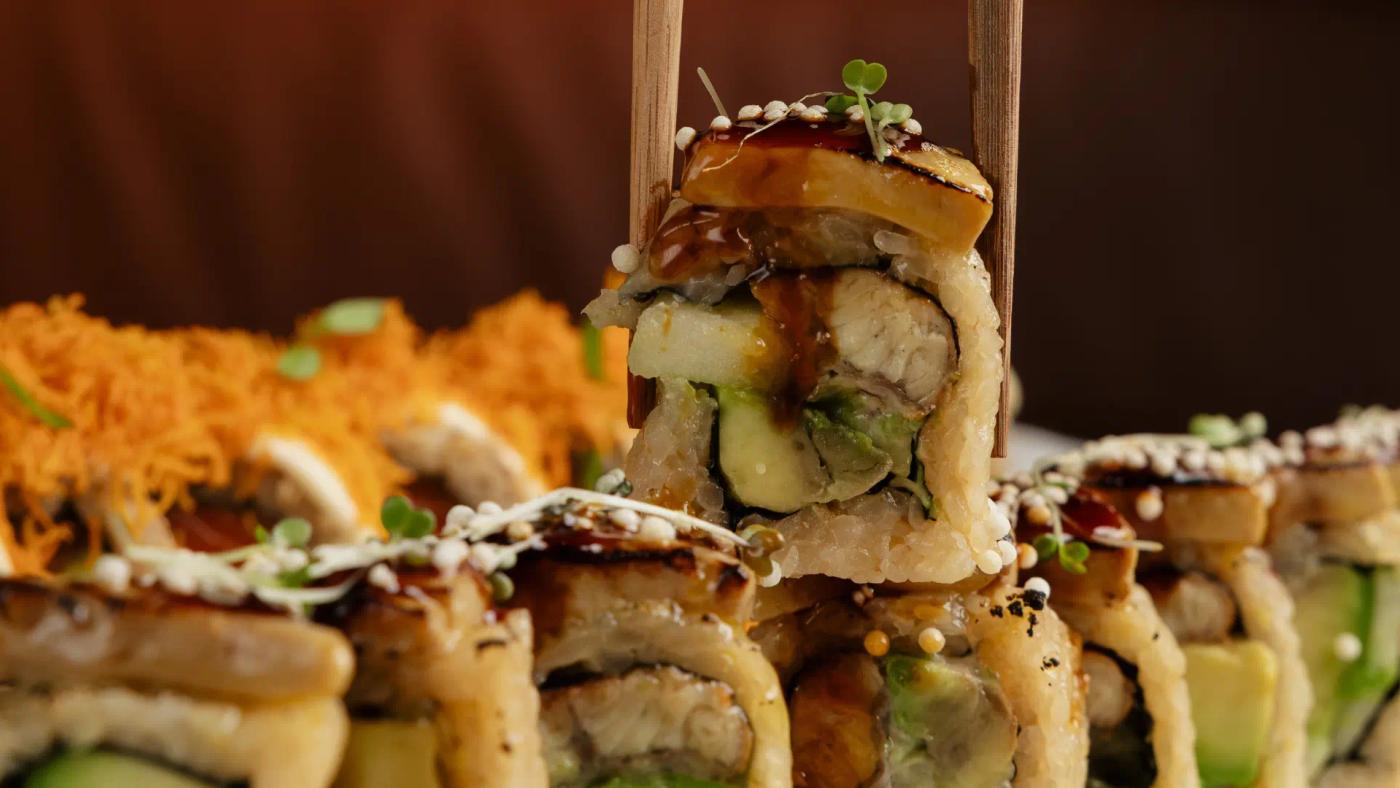
What is umami and why does it make some dishes at Arko restaurant in Eixample irresistible?
It has surely happened to you before. You try an apparently simple dish and, without knowing very well why, you feel like keeping on eating. It isn't especially sweet, nor salty, sour, or bitter. It has something else, that makes the flavor remain in the mouth and pushes you to the next bite. That "something" has a name: umami.
Although today it appears frequently in cooking shows, gastronomic books, and restaurant menus, it remains one of the most unknown concepts for many diners. However, understanding what umami is helps to better understand Japanese cuisine and why some of its dishes result so satisfying.
The fifth flavor that took us years to identify
For a long time, it was thought that only four basic flavors existed: sweet, salty, sour, and bitter. However, at the beginning of the 20th century, the Japanese chemist Kikunae Ikeda observed that some foods had a common quality that didn't fit into any of those categories.
He discovered it by studying dashi broth, one of the pillars of Japanese cuisine. Traditionally prepared with kombu seaweed and other ingredients rich in natural compounds, this broth possessed a deep and persistent flavor that couldn't be described with the usual words.
Ikeda baptized that sensation as umami, a Japanese word that could be translated as "savory" or "tasty." Over time, the scientific community recognized umami as the fifth basic flavor. The curious thing is that it had always been there; only our ability to identify it changed.
Where umami is naturally found
Although we usually associate it with Japan, umami is present in foods from all over the world. Ripe tomatoes contain umami; also cured cheeses, cold meats, anchovies, mushrooms, or Iberian ham. That's why many of these ingredients have a special capacity to provide depth to dishes.
The difference is that Japanese cuisine learned very early to use it consciously. Ingredients like kombu, dried bonito flakes, soy sauce, miso, or shiitake mushrooms have been part of the Japanese culinary tradition for centuries. All of them are especially rich in compounds that enhance that sensation of long and enveloping flavor that we associate with umami.
Why Japanese cuisine masters the art of umami
Japanese gastronomy has a very particular relationship with flavor. While other cuisines usually build intensity through fats, spices, or long cooking times, Japanese cuisine seeks balance.
- Instead of accumulating ingredients, it tries for each to provide something specific.
- An apparently light broth can have enormous gustatory richness. A piece of fish can be delicate and, at the same time, leave a persistent mark on the palate.
- The key is in the combinations.
- When several ingredients rich in umami meet in a same dish, the effect multiplies.
How to recognize it when eating out
Identifying umami isn't always easy at first, because it doesn't appear as an immediate hit of flavor, but as a sensation that develops little by little. It is usually perceived as a pleasant depth, a kind of roundness that fills the palate and makes the flavor remain for longer than usual.
It is also behind that sensation so difficult to explain that makes some dishes seem complete even when they contain very few ingredients. Next time you try a Japanese broth, an especially savory piece of fish or a preparation where the flavor remains in the mouth after eating it, it is very likely that umami is doing its job.
Umami ingredients you can find at Arko
Many of the most appreciated products of Japanese cuisine are excellent examples of umami in action. At Arko, umami appears naturally in numerous dishes on the menu. From preparations based on traditional Japanese techniques to the use of seaweeds or certain fishes: the goal is always the same, to enhance the flavor of the product without hiding its identity.
Because, in the end, umami isn't an ingredient or a recipe. It is a way of understanding flavor, and surely one of the reasons why Japanese cuisine continues to fascinate so many diners around the world.
If you want to discover how umami is expressed in contemporary Japanese cuisine, reserve your table at Arko and explore a menu where tradition, technique, and product work in balance to offer an experience full of nuances.