What is tiger's milk and why does it pair so well with an oyster?
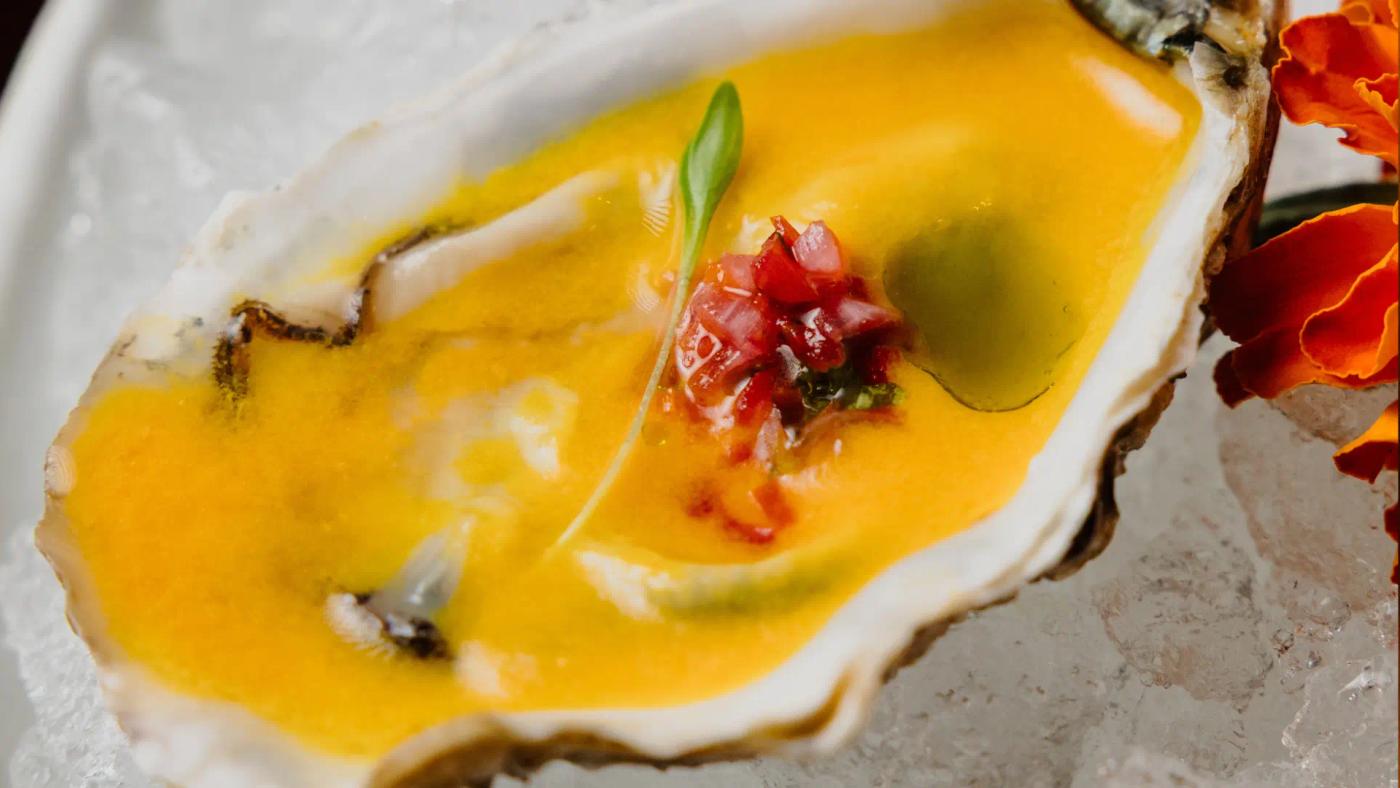
There are names in the kitchen that seem designed to spark curiosity immediately, and "tiger's milk" is one of them. If you've never tried it, it's hard to guess at first, but it is one of the preparations with the most history and soul in Peruvian gastronomy. At Arko, we like to give it a privileged place on our menu in one of our most valued starters: the oyster with tiger's milk, rocoto chili, and cilantro; a bite that perfectly summarizes how two such distant gastronomic traditions can understand each other so well.
The essence born from ceviche
The first thing to clarify is that tiger's milk contains no milk. Originally, it was simply the juice resulting from marinating ceviche: a vibrant mixture of lime, fresh fish, red onion, chili, garlic, and cilantro that remains at the bottom of the dish. Over time, this marinating liquid became so important that it started being prepared separately, with its own identity, refining the balance between citrus acidity and deep sea flavor to turn it into a sauce capable of elevating any product, or served alone as a revitalizing appetizer.
A name between legend and reality
Where does this powerful name come from? There are two theories that coexist: the technical one says it is named for the whitish tone the juice takes when mixed with fish proteins. The more romantic one comes from the streets of Peru, where it has always been believed that this broth is a restorative capable of giving the strength of a tiger to whoever drinks it.
The perfect accompaniment for an oyster
Oysters are a product with a lot of personality, pure sea in every bite; therefore, any accompaniment must be up to their level without eclipsing them. Tiger's milk works here as the ideal ally: its acidity cleanses the palate instantly, cilantro adds a very fresh vegetal note, and rocoto chili adds a progressive spiciness that highlights the iodized nuances of the mollusk.
The meeting point between Japan and Peru
It may seem strange to find such a Peruvian preparation in a Japanese restaurant, but it makes perfect sense if we talk about Nikkei cuisine. This trend was born from the meeting between Japanese immigrants in Peru and local products, fusing the impeccable technique of fish cutting with vibrant flavors like lime or chili. At Arko, we like to honor that history: in our home in the Eixample, the respect for the product we inherited from Japanese tradition constantly dialogues with that mestizo creativity, creating dishes where both cultures coexist.
If you want to discover how Japanese technique and Peruvian flavors meet in a single bite, we look forward to seeing you at 63 Enric Granados Street. Our oyster with tiger's milk is just one of the surprises we keep for those looking for something beyond the conventional. Book your table, come visit us, and let yourself be carried away by a proposal where every detail is designed to be enjoyed from start to finish.