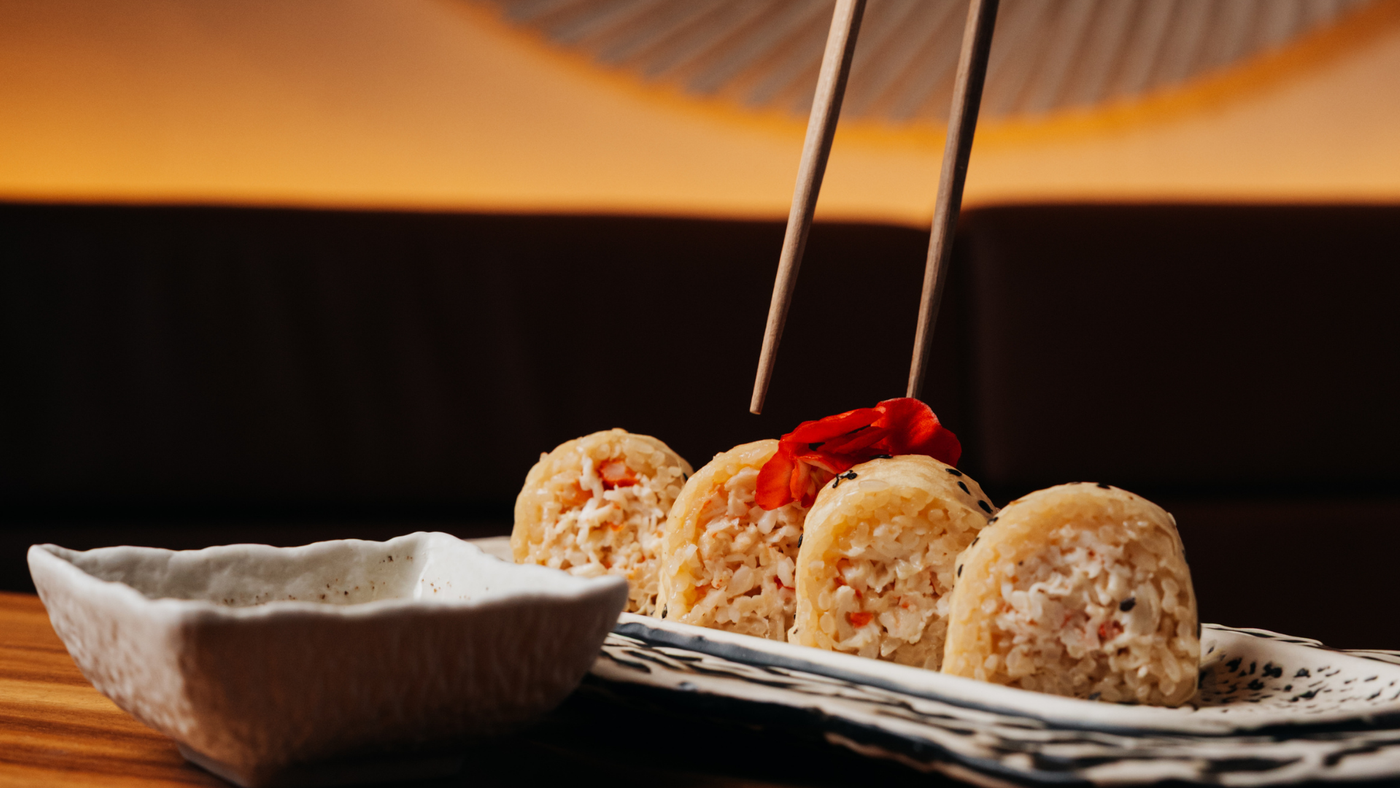
Everything chopsticks tell us about Japanese culture
Learning to use chopsticks can seem like a small challenge the first time you enter a Japanese restaurant. But beyond the technique, these utensils are part of a tradition with centuries of history and reflect a very concrete way of understanding food: sharing the moment and paying attention to the small gestures. You don't need to master the protocol to enjoy good sushi, but knowing some customs helps to better understand a gastronomic culture in which almost everything has a reason.
Chopsticks are much older than they seem
Chopsticks were born in China more than 3,000 years ago and arrived in Japan several centuries later, first as a utensil used in religious ceremonies and, little by little, as part of everyday life. Today they are part of the gastronomic ritual in much of Asia, although each country has adapted them in its own way.
The Japanese use shorter chopsticks with a pointed tip, designed to handle delicate foods like fish. The Chinese usually use longer and blunter models, while the Koreans traditionally use metal chopsticks: behind an apparently simple object there are centuries of culinary evolution.
How to hold chopsticks correctly
There is no single perfect way, but there is a technique that makes things much easier:
- The bottom chopstick remains supported between the thumb and the ring finger. It should not move.
- The top one is held as if it were a pencil and is the only one that moves.
- The movement consists of bringing the top chopstick closer and away from the other.
It may seem complicated during the first few minutes, but it quickly becomes natural. If resists a bit, it doesn't matter: in Japan, no one expects a visitor to master the technique from the first attempt.
Some gestures to avoid
More than a list of strict rules, Japanese etiquette seeks to convey respect for food and those who share the table, small details that perhaps do not change the experience, but help to better understand the cultural meaning that these utensils have.
These are some gestures that are best avoided:
- Sticking chopsticks into a bowl of rice: In Japan, it recalls funeral rituals, where rice is offered with chopsticks placed vertically.
- Passing food from one pair of chopsticks to another: This is also related to funeral ceremonies and is considered inappropriate during a meal.
- Pointing at someone with chopsticks: Just as pointing with your finger can be considered impolite, doing so with chopsticks is also considered a discourtesy.
- Rubbing disposable chopsticks together: Although many people do it to remove possible splinters, it can be interpreted as a criticism of the restaurant's quality.
The most important thing is not etiquette, but respect for the product
We often think that eating sushi consists of memorizing a set of rules. In reality, most of them are born from a much simpler idea: do not unnecessarily alter the chef's work and enjoy each piece as it has been conceived. At Arko, a Japanese restaurant in Barcelona's Eixample, that philosophy is reflected both in the selection of the product and in the way it is served. Each nigiri, sashimi, or maki is designed to offer a specific balance between rice, fish, and seasoning, without the need for artifice.
In the end, chopsticks are just an excuse
Mastering chopsticks does not make anyone an expert in Japanese cuisine; what is truly interesting is discovering that behind them exists a culture that attaches as much importance to the gesture as to the flavor, to the rhythm of the meal as to the dish itself. The next time you sit in front of a plate of sushi, think that these two small chopsticks have been accompanying the meals of millions of people for centuries: they may be one of the simplest utensils in the world, but they are also one of the best at explaining a way of understanding the table.